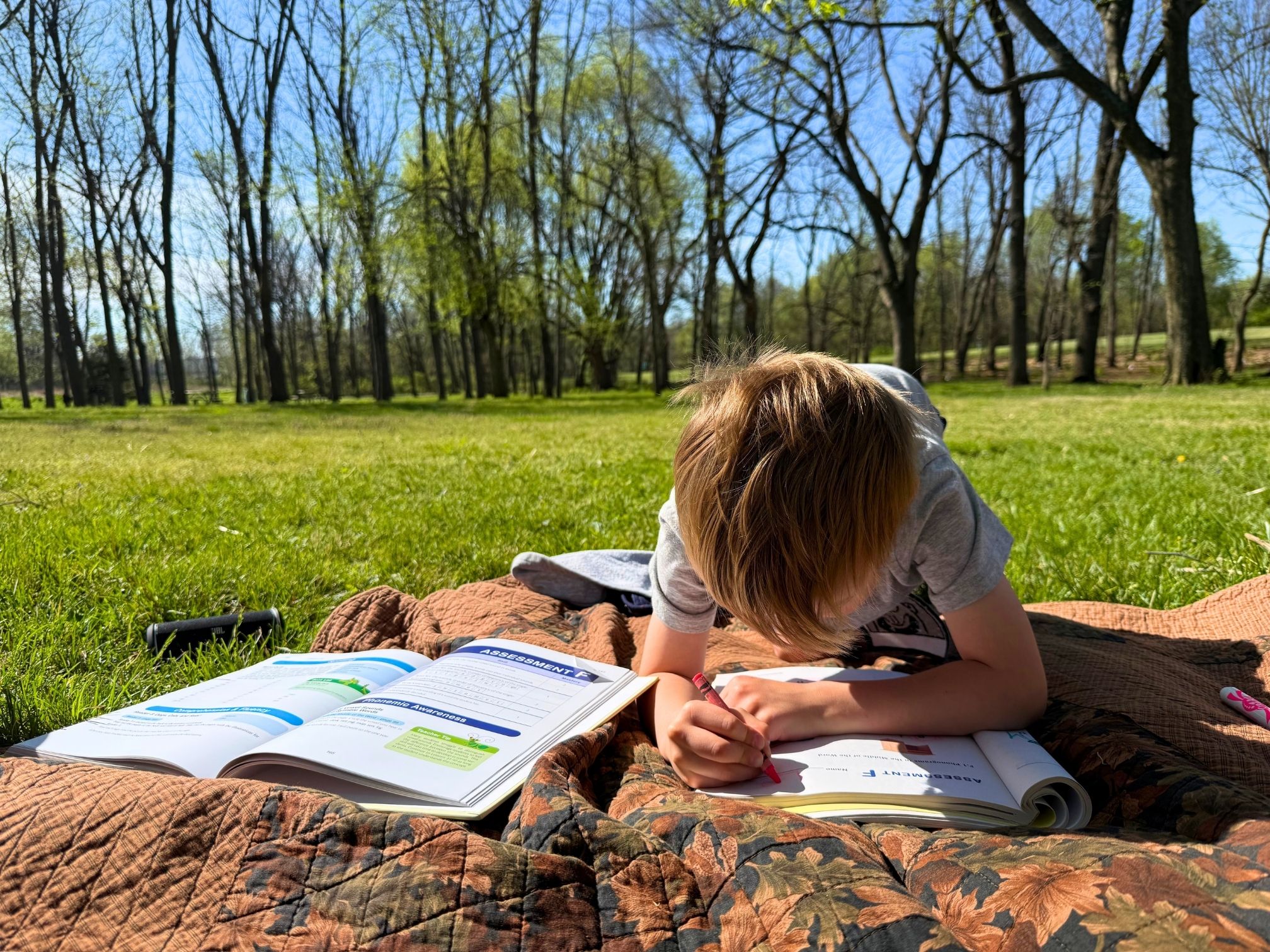
While everyone is buying pencil cases and new school clothes this week, I’m preparing for the end of August in a different way.
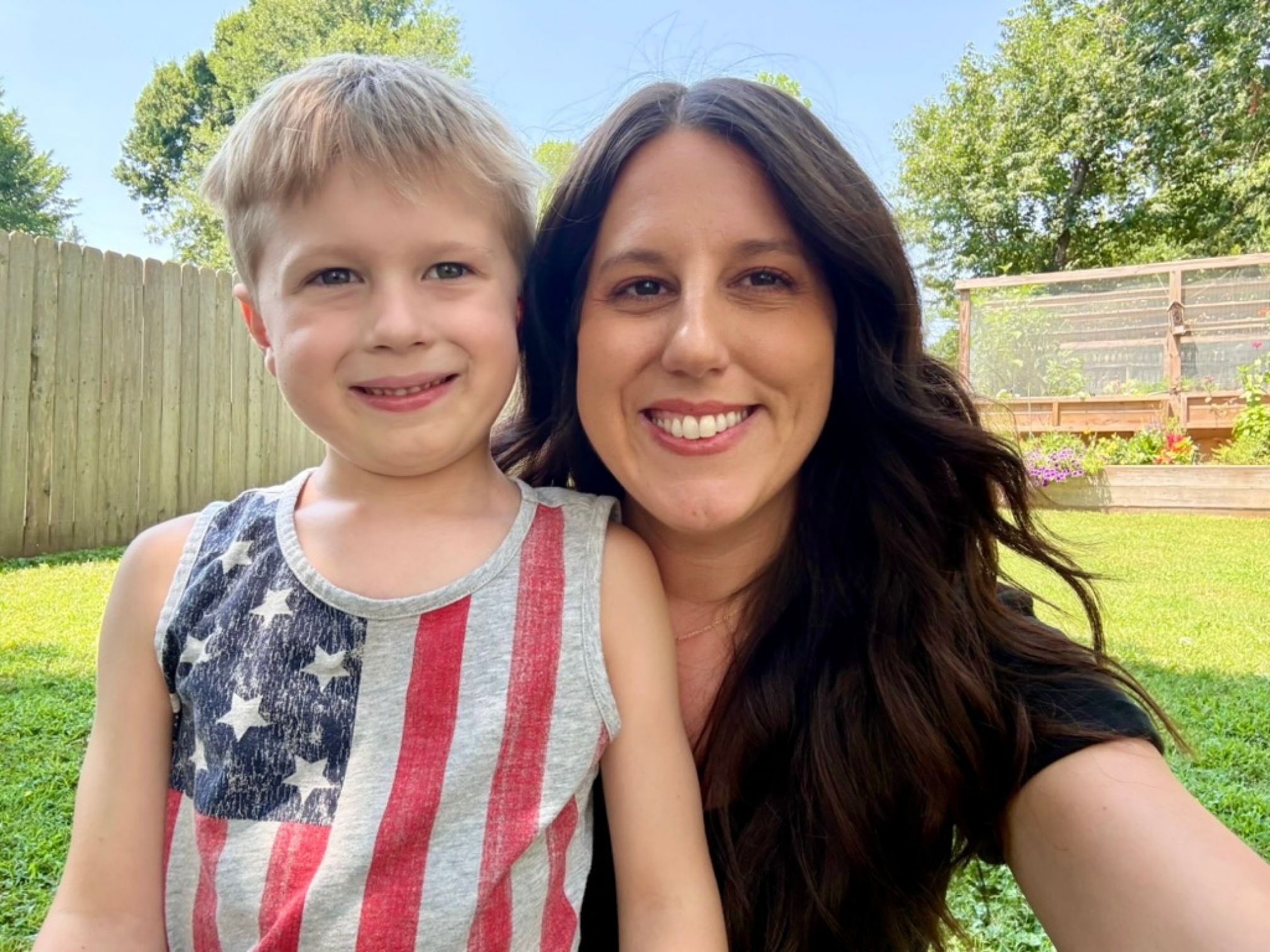
I’ve chosen to homeschool my son Leo, who, if he were attending public school, would be entering his kindergarten year.
Instead of choosing a new backpack and attending meet-the-teacher events, I’m sorting through math kits and flashcards, excitedly organizing lesson plans, and wondering what the heck I’ve gotten myself into.
But homeschooling doesn’t have to mean doing everything alone. Springfield has given us more options — and more community — than I expected.
The appeal of homeschooling
I can’t tell you how many times someone has looked at me like I’ve grown two heads when I tell them I’m homeschooling Leo. Sometimes they say something like, “Oh?” or “I could never do that.” But often, their eyes tell me more than their mouths.
Confusion. Curiosity. Maybe the tiniest dollop of discomfort.
Whatever the reactions, I find homeschooling wildly appealing. I find all education appealing, to be frank. If I could live in a library or a university, I would. I’d set up a cot next to stacks of books, and sneak into lectures day and night.

Teaching Leo what I’ve learned about the world — and him teaching me right back — has been the delight of my life.
Before choosing to homeschool Leo, I toured several schools in Springfield, met with principals, read books written by educators, attended a public forum on the future of education, and kept a school choice spreadsheet that got me laughed at by my loved ones.
I was dazzled by the variety and gripped by competing philosophies. How could I choose just one?
There were things I loved about my public school options, things I loved about the private schools, and things I loved about homeschool. There were things I hated about them all.
At the end of the day, teaching Leo at home threw open the world to our family.
Being able to tailor learning to Leo’s brain — his pace, his interests, his choices — and adjust it to the fast-moving world he will grow up in is deeply appealing.
And I’m eager to be his guide — teaching him, matching him with tutors and mentors, and helping him grow into a lifelong learner himself.
Springfield’s homeschool world

I’ve spent a year in a “practice run” state, deciding to enter the homeschooling community during Leo’s pre-K season. I wanted to see what it was like before committing. I wanted to see if I was up to the challenge, and if homeschooled kids really are… well, weird. (It turns out I’m one of the weird ones.)
Over the past 12 months, I’ve learned how enormous this task really is, and how daunting it can be to enter as a newbie. There’s a massive community of homeschoolers here in Springfield, and families who choose it for an incredibly diverse list of reasons. Some choose it to surround their children with people of the same faith and values. Others choose it for its adaptability to neurodivergent brains or unique physical challenges. Some choose it because they believe in a particular educational style — classical, Charlotte Mason-inspired, John Gatto-inspired, project-based, entrepreneurial, etc. And that is just the tip of the iceberg.
There are communities for every type of homeschooler.
Cassy Cochrun, a homeschooling mom and the assistant publisher of Macaroni KID Springfield, put together an amazing list of homeschooling resources, co-ops and programs in Springfield. The enormity of this list should show you the size and health of this community.
Interested in homeschooling?

Most homeschool conversations seem to revolve around the “why,” but some people in my life have started asking me the “how.” How did you get started? How do you actually do it? These people seem to have genuine interest in doing this themselves. For those people, here’s my advice.
Step one: Decide if it’s realistic. I’ve met a huge variety of families in the homeschool world: ones with two working parents, single moms, single dads, stay-at-home moms, great aunts, grandparents, and everything in between. It is just not true that only wealthy families or stay-at-home parents can homeschool, but it is no doubt a money and time consideration for those who choose it. Homeschooled children need a lot of attention, and attention doesn’t come free.
Step two: Decide what educational style matches your learner best. I found this article helpful in determining that for my family.
Step three: Find community. There are many organizations, co-ops, and programs designed for homeschooling families in Springfield. Some are free, some are paid. In my opinion, joining a community was the best idea I ever had, and the support we’ve received from these local families has been outstanding.
What we’ll be teaching at home and in community

As you will see, homeschool is rarely done entirely at home. I’ve connected with groups of local educators and parents who share passions and interests with my family, and we now do life together.
This section is for the fellow Type A moms. The ones who want to know exactly what I’m doing.
Here’s what we’ll study in Leo’s kindergarten year, and how we’ll do it.
Community-based learning:
Latin, science, grammar, history, geography and fine arts
We are enrolled in a Classical Conversations community that meets weekly in Springfield. Parents and their children attend a 9 a.m. to 1 p.m. “community day,” where the above subjects are introduced in a typical classroom setting by a parent tutor. The children are divided by age, and stay with their class and tutor throughout the school year. All classes combine for recess, group activities and games. For the rest of the week, parents deepen the study of those subjects at home through curriculum and companion materials. CC groups also regularly attend field trips, play dates and holiday events together, and celebrate big educational milestones of their students as a community.
Nature
Leo is also enrolled in a once-per-week nature study program called School of the Wild. He and his classmates spend an entire day outside at the beautiful Lovett Pinetum in Strafford, where they walk trails, explore the creek, and learn about local bugs, animals, and plants. They get to hold real-life specimens, observe habitats and nests in the wild, and watch the environment change with the seasons. It is run by a former Summit Prep School science teacher, who was also a zoologist and Wonders of Wildlife educator.
Music
Leo is enrolled in a music theory and piano program in Springfield.
Home-based learning:
English language arts
We use a fun, game-filled curriculum designed both for classrooms and for homeschooling parents called Logic of English. It’s based on a teaching approach called Orton-Gillingham, which was originally designed for dyslexic learners. Now it’s widely considered a rock-solid program for all beginning readers. At the end of the day, it’s just a super thorough way to teach English as a logical language of parts. We started with the phonics-heavy program for pre-K and kindergarten learners — Foundations A — when Leo first turned 5. When school starts in late August, we’ll progress him into Foundations B.
Mathematics
We are using a curriculum designed for homeschooling parents called Math with Confidence, written by math educator Kate Snow. It is a scripted, open-and-go program that leads parents step-by-step through teaching all the concepts a kindergartner needs to master: counting to 100, writing numbers, beginning addition and subtraction, shapes and patterns, coins, time, and measurement.
These are the bones of our homeschool life, but I fully expect the year to include flexibility, new discoveries, and lots and lots of grace.
If you have any questions about how to get plugged into the homeschool community, I’d be happy to chat! You can reach me by email or on Facebook.




Leave a Reply