Every year, wave after wave of sickness hits our family as soon as yellow school buses start trundling down our street.
This year, our first viral bug didn’t wait for school to start. We caught it during orientation week.
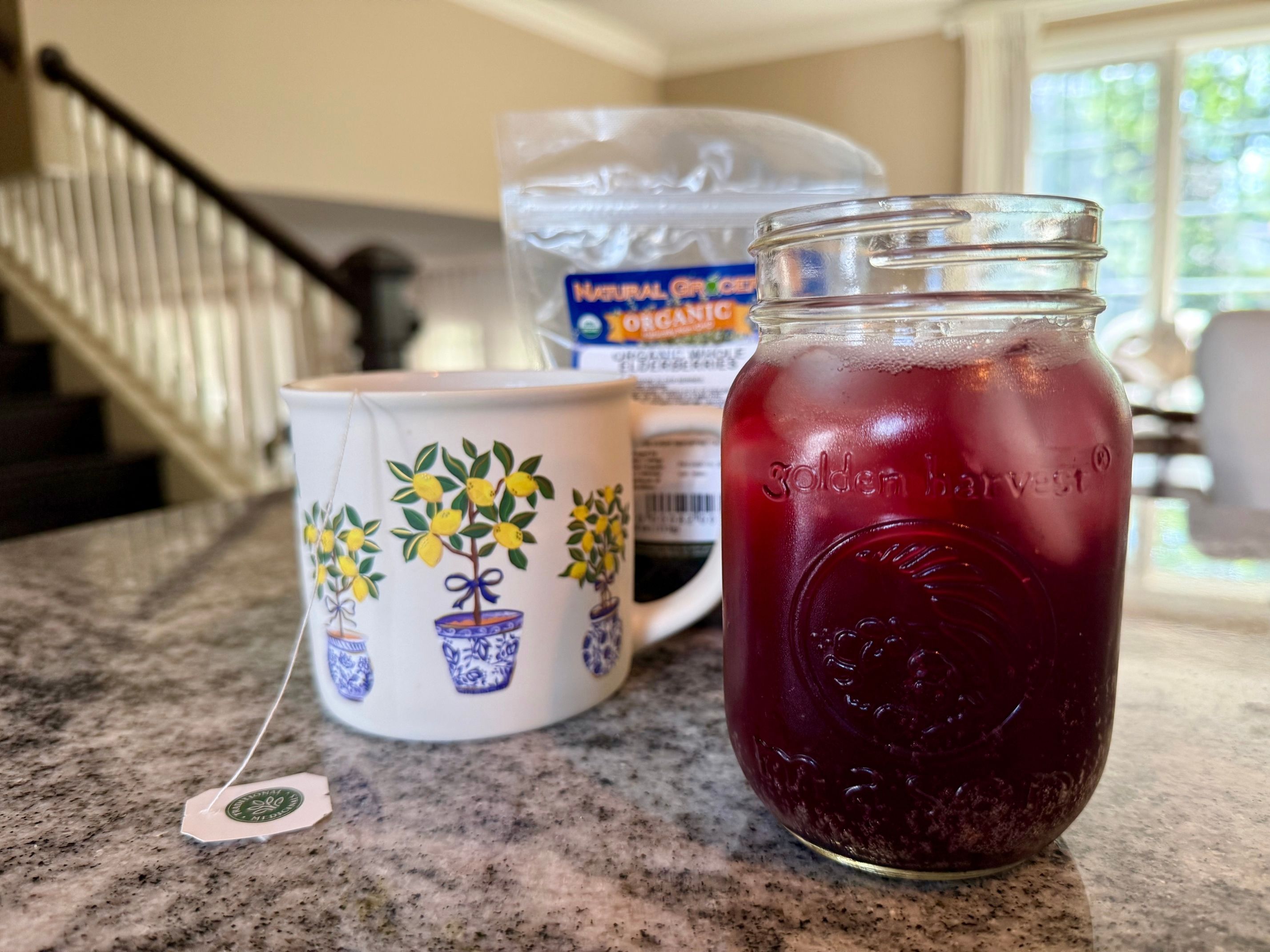
It just so happened that I had been invited to a church event days prior, where a woman taught our small group how to make elderberry syrup from scratch. I can’t tell you how comforting it was to spoon this deep purple liquid—which smelled like cinnamon, cloves, and Christmas—into cups of warm chamomile tea.
As this woman knew, now is the season for prepping your family’s cold-care items. I’d never before thought about getting ahead of the school sickness season, but as I sit here with a sore throat and a raw nose, here’s how I’m prepping for next time.
Prepare before sickness arrives
Items to have on hand
- Thermometer
- Fever-reducing medicine
- Saline packets and distilled water for nasal rinses
- Electrolyte packets
- Tissues
- Tea
- Honey
- Zinc lozenges

Prep elderberry syrup at home
My favorite new cold care prep idea is to make dry elderberry packets, which you can quickly cook up if sickness strikes. You can gather the ingredients from Springfield grocery stores and have them at the ready when the house inevitably starts sneezing.
I’ve got the dry ingredients (premeasured) stored in Ziploc bags in my tea drawer, along with printed instructions for cooking it. I like this recipe from Happy Healthy Mama.
Elderberry is a cold remedy that’s been around for roughly 2,000 years and has shown evidence of shortening the duration of a cold by 2 days (and with less severe symptoms). It was tested in a randomized, double-blind, placebo-controlled trial. Note: Raw elderberries are toxic, so be sure to follow a trusted recipe and cook them into a syrup before consuming them!
Most recipes call for adding raw honey to the elderberry syrup at the end. Honey has even stronger evidence for soothing coughs: Studies involving children have found that it can provide about as much relief from nighttime coughing as dextromethorphan, a common cough suppressant. (Note: Never give honey to a child younger than 1 because of the risk of infant botulism.)
Elderberry is typically sold in dried berry packets. I found organic dried elderberries at Natural Grocers on Glenstone in the dried goods aisle.
What the evidence says about zinc and vitamin C
Vitamin C gets a lot of attention during cold season. Taking it regularly can shorten a cold, but starting it after symptoms appear doesn’t seem to help much.
If a cold sneaks up on you and you haven’t been taking your vitamins, there is some evidence that oral zinc lozenges may shorten a cold when taken soon after symptoms begin!
I like the convenience of Emergen-C Immune+ packets, which contain both vitamin C and zinc. Zinc can cause nausea, so follow the package directions and try taking it with food.
Build everyday defenses
Prioritize sleep above all else
As school routines kick off, most kids are going to bed earlier than they did all summer. But there’s more than one reason to enforce an early bedtime. Sleep, more than pretty much anything else on this list, helps our bodies fight illness and heal quickly. Once you get the kids in bed, go to sleep yourself! It’s so much easier to care for a sick family when you’re well-rested.
Don’t rely on hand sanitizer—wash your hands (with soap and water)
Washing your hands with soap and water is the gold standard for removing all kinds of germs, infectious disease experts say. Hand sanitizer is a good backup if you can’t get to a sink, but prioritize actual washing, especially after being in bathrooms, public places, and before meals.
Crack your windows
Colds, flu, COVID-19, RSV, and other respiratory infections don’t spread only through dirty hands and doorknobs. Sick people release tiny virus-containing particles when they breathe, talk, cough, and sneeze. In a closed room with little airflow, those particles can accumulate. Outdoor air helps dilute them and carry them away.
That’s why the Centers for Disease Control and Prevention now considers clean air a core strategy for preventing these respiratory bugs.
Open windows, place fans in them to direct fresh air indoors, and turn on a HEPA air purifier if you have one.
Make them comfortable
Make and freeze soup
There’s nothing like homemade soup when you’re sick, and I always find myself in the kitchen, feeling like death, trying to whip up something hot and comforting.
This year I had a little shortcut. In my freezer, I had several bags of homemade chicken stock, which I made from a leftover rotisserie chicken carcass last month. I took one out, put the frozen block in a stockpot, and started chopping every spare vegetable I could find. Within minutes, I had a pot of vegetable barley soup that could have raised me from the dead.
I would have been even happier if I’d had a fully prepared soup in my freezer — maybe chicken and wild rice, lentil, chili or another family favorite. If you’re making soup for littles, grab a packet of fun-shaped noodles to spoon into a simple broth.
And honestly, if making and freezing stock or soup sounds too cumbersome, just stock your pantry with canned soup and a box of Saltines. One of my favorite sick-day meals is beef ramen noodles from a packet, or takeout pho with rich, spiced broth.
Wishing your family resilience through the wave of bugs ahead!












Leave a Reply